
The Key to the Past
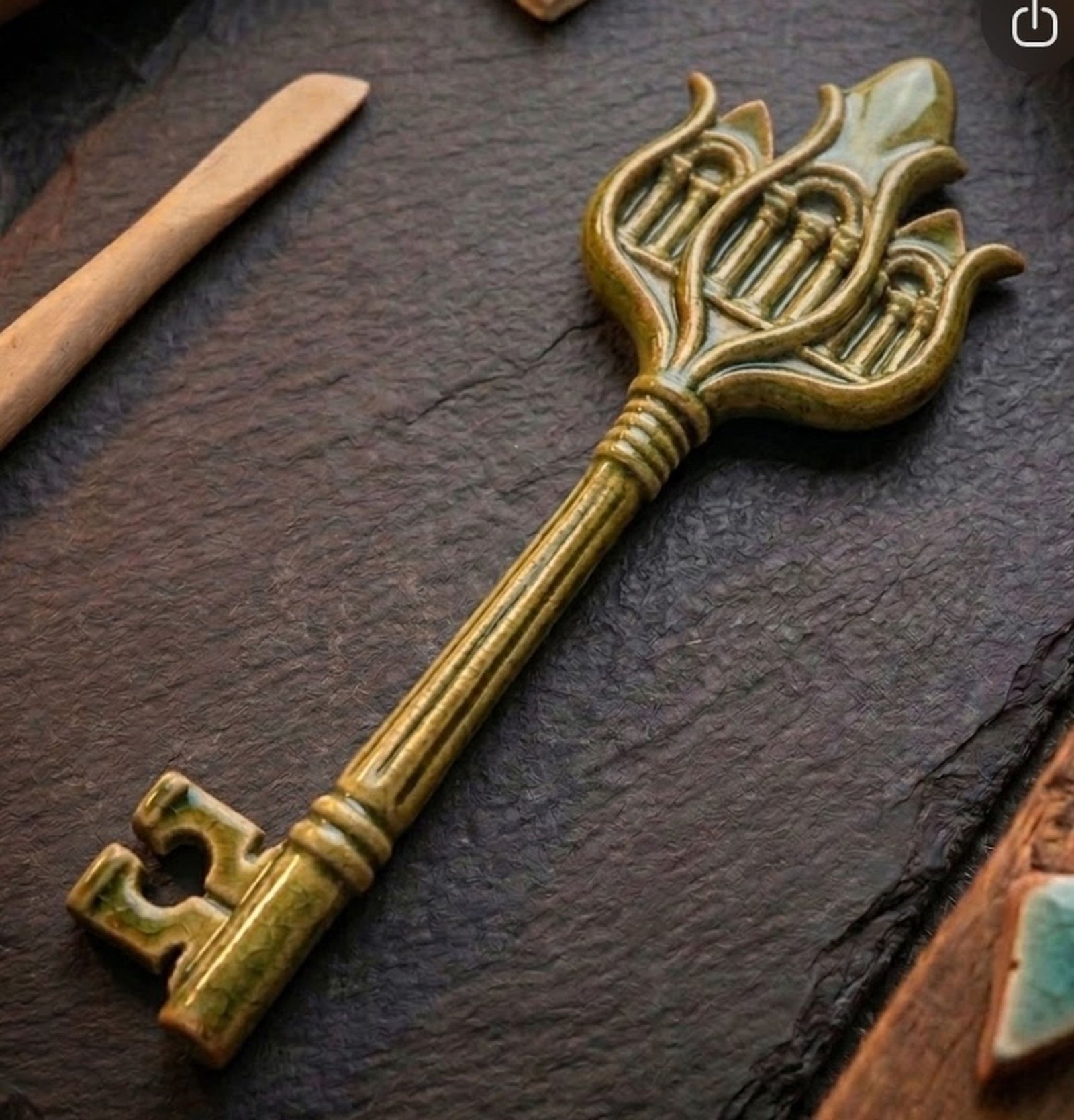
The Key to the Past is a bespoke ceramic piece that turns the experience of travelling in time into a physical object. The body of the object is modelled on the sturdy stone columns of the Binbirdirek Cistern. Those columns rise upward and become arches that echo the vaulted ceilings of the cistern.
Towards the top, the arches take the shape of the Istanbul tulip, the emblem of the Ottoman period. The design brings Byzantine architecture and Ottoman form together in a single body. The piece is cast in cellulose-free liquid ceramic slip. Its surface texture reproduces the weight and visual depth of oxidised antique brass. Holding this key in your hand, you touch the historic heritage of two great empires directly.
Sultanahmet / Istanbul
CREDITS
ABOUT THE PROJECT
The Key to the Past is a bespoke ceramic keepsake that turns the experience of travelling in time into a physical object. The piece draws on the depths of the Binbirdirek Cistern and brings the legacy of two great empires together in a single form. Holding the object in your hand, you feel the historic layers of the city directly.
The body of the design is modelled on the sturdy stone columns of the Binbirdirek Cistern. The columns rise upward and become structural arches that echo its vaulted ceilings. These arches grow organically into the silhouette of the Istanbul tulip, the botanical emblem of the Ottoman period. In this way the Byzantine architectural legacy and Ottoman elegance meet in a single object.
Cellulose-free liquid ceramic slip is used in production. To trigger reactive surface transformations, the object is fired within a precise range between 920°C and 950°C. This firing binds the bespoke "Byzantine Yellow S 1613" glaze permanently to the clay. The resulting texture imitates the weight and visual depth of oxidised antique brass exactly. That reactive surface comes into full aesthetic accord with the amber lighting of the cistern. Produced in a run of 170 for special guests, the key gives the spirit of the event a tangible form.